
In commercial trucking, an unexpected roadside breakdown is never just a mechanical inconvenience. When a loaded tractor-trailer or vocational rig stalls on the shoulder of an interstate, costs multiply by the minute—combining emergency dispatch fees, missed delivery penalties, driver idle pay, spoiled freight risks, and potential Compliance, Safety, Accountability (CSA) violation points. Over time, reactive maintenance erodes operating profit margins far faster than fluctuating fuel prices or seasonal freight slowdowns.
Running a disciplined preventive maintenance (PM) program flips that equation entirely. By catching worn belts, subtle air leaks, contaminated fluids, and uneven tire wear inside the shop on your schedule—rather than on the side of a highway at midnight—fleet managers and owner-operators dramatically extend engine lifespans and keep utilization rates high. Consistent inspections also protect drivers on the road and demonstrate documented regulatory compliance during roadside Department of Transportation (DOT) audits.
This comprehensive checklist breaks commercial vehicle care into five actionable layers: daily driver walk-arounds, scheduled mileage and engine-hour shop intervals, wheel-end and suspension inspections, seasonal weather readiness, and breakdown recovery planning.
Daily Pre-Trip and Post-Trip Driver Inspections

Checking Engine Fluids, Belts, and Under-Hood Leaks Before Startup
Every reliable preventive maintenance program starts in the yard before the ignition key turns. Checking fluids while the engine is cold and parked on level ground gives drivers an accurate baseline and prevents burns from pressurized cooling systems. During morning walk-arounds, drivers should pop the hood and inspect every fluid reservoir and belt drive systematically:
- Engine oil and coolant levels: Pull the oil dipstick, wipe it clean, reinsert it fully, and verify the oil sits inside the safe operating range without looking milky (which indicates coolant contamination) or smelling strongly of raw diesel fuel. Check the translucent coolant surge tank to confirm fluid sits between the cold minimum and maximum marks.
- Power steering and windshield washer fluids: Verify power steering fluid meets the cold fill line and inspect steering gearboxes and hydraulic hoses for dark, greasy seepage. Top off washer reservoirs with seasonally appropriate fluid so road grime never impairs visibility.
- Belts, hoses, and wiring harnesses: Press gently on serpentine and fan drive belts to check tension, looking closely for glazing, missing ribs, or fraying edges. Squeeze radiator and charge-air-cooler hoses to ensure they feel firm rather than spongy, and verify that clamps sit tight.
Spotting a weeping water pump seal, a cracked heater hose, or a loose alternator bracket during a ten-minute morning check allows technicians to address minor wear before it escalates into major semi truck repairs hundreds of miles from home terminal support.
Testing Air Brake Pressure, Slack Adjusters, and Warning Alarms
Air brake defects consistently rank among the leading causes of roadside out-of-service orders during federal and state commercial vehicle inspections. Drivers must never skip the standardized air brake sequence before releasing parking brakes:
- Governor cut-out test: Start the engine, build system air pressure, and confirm the air compressor governor cuts out cleanly between 120 and 140 PSI.
- Applied leakage test: Shut the engine off with the key in the “On” position, release the spring parking brakes, and press and hold the service brake pedal firmly for one full minute. Pressure drop must not exceed 3 PSI for a single vehicle or 4 PSI for a combination tractor-trailer.
- Low-air warning alarm test: Fan the brake pedal rapidly to bleed air pressure down and verify that both the dashboard warning light and audible buzzer activate before pressure drops below 60 PSI (typically around 55 to 75 PSI).
- Spring brake pop-out test: Continue fanning the brake pedal down to roughly 20 to 45 PSI and confirm that both the tractor and trailer parking brake valves pop out automatically, engaging the emergency spring brakes.
Once wheel chocks are placed, drivers should also inspect brake chambers for dents or loose mounting bolts, verify gladhand rubber seals are intact without cracking, and measure pushrod travel on automatic slack adjusters to ensure stroke remains well within legal adjustment limits.
Inspecting Lights, Mirrors, Cargo Securement, and Weather Tarps
Exterior visibility and load containment protect both the driver and surrounding motorists throughout every shift. Walk completely around the tractor and trailer while four-way flashers and headlights are switched on to verify low beams, high beams, clearance markers, turn signals, brake lamps, and license plate lights shine brightly without flickering. Check convex and main mirrors for cracks or loose brackets, confirm mudflaps hang securely without tearing, and visually inspect the fifth-wheel locking jaws wrapped tightly around the trailer kingpin with zero gap between the upper and lower fifth-wheel plates.
Before pulling onto the highway, double-check all load securement hardware—including ratchet straps, transport chains, edge protectors, and load locks—for fraying, bent hooks, or slack tension. For flatbed, open-top, and specialized haulers, inspect every truck cover or automated rolling tarp system for wind tears, missing grommets, bent bows, and worn crank cables so rain, road salt, and highway wind gusts cannot damage freight or create loose flapping hazards in adjacent lanes.
Scheduled Mileage and Engine-Hour Service Intervals
Following Oil Drain Intervals, Filter Swaps, and Fluid Sampling
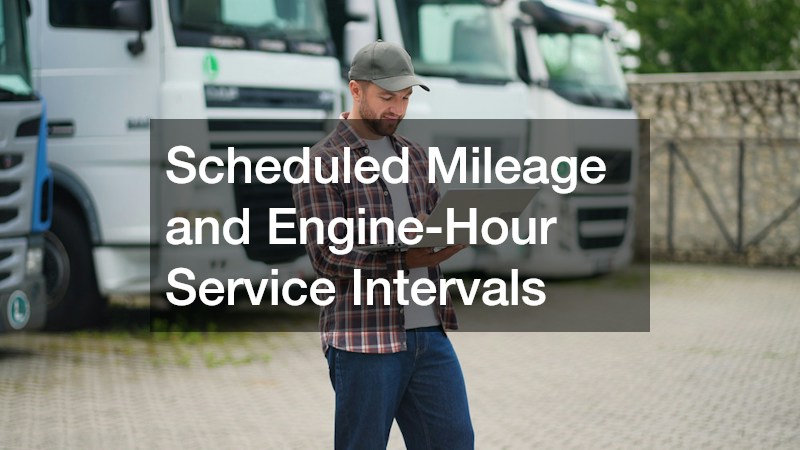
While daily driver walk-arounds catch immediate external issues, structured A-, B-, and C-service shop intervals protect internal powertrain components over hundreds of thousands of miles. Modern heavy-duty diesel engines accumulate wear not just from highway mileage, but also from extended idle time, PTO operation, and stop-and-go urban delivery routes. Tracking both odometer miles and total engine hours—typically counting every hour of idle time as roughly 25 to 30 miles of equivalent engine wear—ensures oil changes occur before viscosity breaks down or soot loads overwhelm additives.
During every scheduled oil and filter service, technicians should:
- Replace full-flow and bypass engine oil filters alongside primary fuel-water separators and secondary fine-micron fuel filters to protect high-pressure common-rail fuel injectors from microscopic particulate wear.
- Draw a warm engine oil sample mid-drain for laboratory Used Oil Analysis (UOA). Trending wear metals such as iron, lead, copper, and aluminum—alongside sodium or potassium traces—alerts fleet managers to bearing wear, coolant leaks, or air intake dust ingestion months before mechanical failure occurs.
- Inspect and service engine air intake filters using dash-mounted restriction gauges rather than tapping filters on concrete, which damages delicate pleated filter media and allows abrasive dust straight into turbocharger compressor wheels.
Servicing Diesel Aftertreatment Systems (DPF, DEF, and EGR)
Emissions aftertreatment components represent one of the highest maintenance cost centers on modern commercial trucks, yet most unscheduled derates stem from neglected upstream maintenance. Unburned fuel from worn injectors, oil consumption from failing turbo seals, or excessive low-temperature idling quickly loads the Diesel Particulate Filter (DPF) with ash that normal active regenerations cannot burn off.
Build dedicated aftertreatment checks into every 50,000-to-100,000-mile service interval:
- Clean the Diesel Exhaust Fluid (DEF) dosing injector tip to remove crystallized urea deposits and replace the DEF supply pump filter per manufacturer mileage schedules.
- Check differential pressure sensor tubes across the DPF for soot blockage or cracked silicone lines that trigger false fault codes.
- Schedule professional thermal or pneumatic DPF ash cleaning around 200,000 to 300,000 miles—before ash accumulation cracks the expensive ceramic substrate—and inspect Exhaust Gas Recirculation (EGR) coolers and valves for carbon buildup.
Protecting Vocational Hydraulic Systems, Hinges, and Cargo Beds
Vocational trucks operating in construction, municipal maintenance, forestry, and aggregate hauling endure punishment far beyond steady interstate cruising. Wet hydraulic lines, abrasive stone loads, and constant power take-off (PTO) cycling require targeted maintenance during every shop visit. Technicians servicing a commercial dump truck should inspect telescopic hydraulic lift cylinders for chrome scoring or weeping wiper seals, check PTO drive shafts and U-joints for play, verify hydraulic reservoir fluid clarity, and grease tailgate hinge pins, latch hooks, and body pivot bushings thoroughly.
Equally important is protecting the interior cargo body against abrasion and corrosion. Hauling wet gravel, crushed limestone, hot asphalt, or winter road salt quickly strips factory paint and pits bare steel floors, causing sticky loads to hang up during tipping cycles. Inspecting and maintaining a heavy-duty truck bedliner—checking for gouges, lifted edges, or worn high-impact zones—keeps cargo sliding out smoothly, reduces hydraulic strain during dumping, and extends the structural life of the body by years.
Tires, Wheel Ends, Steering, and Suspension Care
Monitoring Tire Inflation, Tread Depth, and Irregular Wear Patterns
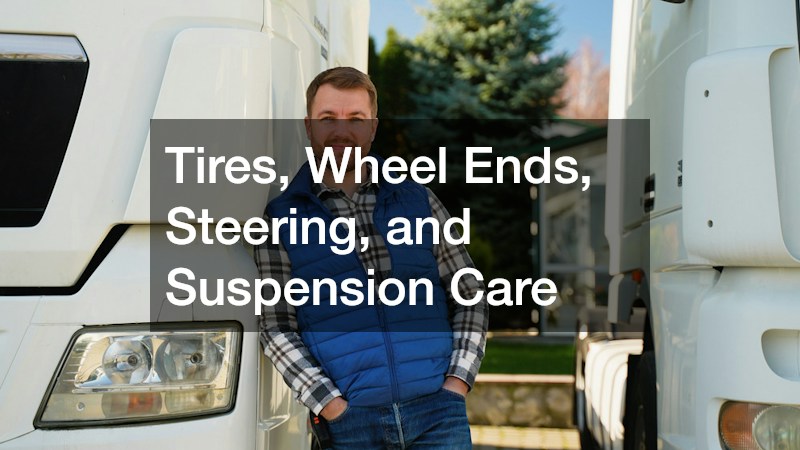
Tires represent one of the largest ongoing consumable expenses in commercial trucking, and improper inflation is the number-one killer of casing life. Running a heavy radial tire just 15% under its recommended cold inflation pressure increases casing flex, generates destructive internal heat, hurts fuel economy, and dramatically raises the risk of a catastrophic highway blowout.
Enforce strict tire discipline across both shop technicians and drivers:
- Verify cold PSI with calibrated gauges: Check all steer, drive, and trailer tires—including inner duals—before the truck rolls, confirming matched pressures across dual pairs so one tire never carries a disproportionate share of the axle load.
- Measure tread depth across multiple grooves: Federal regulations require at least 4/32 inch of tread depth on all steer tires and at least 2/32 inch on all drive and trailer tires, with zero exposed cords, sidewall bulges, or tread separation.
- Diagnose wear patterns early: Cupping or scalloping on steer tires points directly to worn shock absorbers or loose wheel bearings; feathering across tread ribs signals improper toe alignment; rapid wear on both shoulders indicates chronic underinflation. Catching alignment and shock issues early preserves expensive steer casings for retreading.
Auditing Heavy-Duty Suspensions and Specialized Rigging Equipment
Beneath the frame rails, suspension and steering components absorb millions of road shocks while keeping multi-ton loads tracking straight. During scheduled pit or lift inspections, technicians should pry on tie-rod ends, drag links, and kingpins with a dial indicator to measure wear within manufacturer tolerances, inspect leaf spring packs for cracked leaves or shifted center bolts, and check air-ride suspension bellows for dry rot, chafing, or leaking height-control valves.
Fleets operating specialized vocational haulers face even stricter structural demands. Heavy-haul tractors transporting massive core-drilling rigs for geo technical engineering firms across rough unpaved job sites—alongside specialized crane carriers and boom trucks deployed by a custom engineer lifting service—subject frame rails, crossmembers, walking-beam suspensions, and hydraulic outrigger pads to extreme torsional twist and concentrated point loads. For these heavy-duty vocational rigs, scheduled PM checklists must include dye-penetrant or visual crack inspections around fifth-wheel subframes, outrigger mounts, torque rods, and multi-axle trunnion bushings.
Seasonal Weather Preparation and Electrical Reliability
Preparing Cooling Systems and Cab HVAC for Summer Heat
Extreme summer heat places immense thermal stress on turbocharged diesel engines pulling heavy gross vehicle weights up long mountain grades. Before temperatures climb, technicians should pressure-test the cooling system and radiator cap, test coolant freeze/boil point and supplemental coolant additive (SCA) nitrite levels to prevent cylinder liner cavitation, and verify that viscous or air-operated engine fan clutches engage cleanly at target temperatures.
Equally important is cleaning the radiator stack from the inside out. Road grime, cottonwood seeds, insects, and oil mist pack tightly between the air conditioning condenser, charge air cooler, and main radiator cores—blocking airflow and causing rapid overheating under load. Blowing fins clean with low-pressure water or compressed air and checking cab A/C refrigerant pressures keeps both the engine and the driver cool. Overlooking cooling maintenance during peak summer freight season can leave a loaded rig stranded on a steep grade waiting for heavy duty towing, where keeping high-visibility reflective triangles deployed and emergency contacts accessible ensures a commercial tow truck can hook up safely without creating secondary highway hazards.
Recordkeeping, Compliance, and Breakdown Recovery Readiness
Establishing Pre-Vetted Roadside Assistance and Recovery Partnerships
Even the best-maintained commercial fleet will occasionally encounter road debris tire blowouts, unexpected sensor failures, or electrical faults far from home base. Trying to search online for emergency help while a truck sits disabled on a busy highway shoulder wastes critical time and often results in inflated non-contract recovery rates.
Smart fleet managers establish commercial accounts ahead of time with a vetted towing company and mobile diesel repair network covering their primary freight corridors. Train drivers on an exact breakdown dispatch protocol—recording the nearest highway mile marker or exit number, confirming loaded versus empty gross weight, noting axle configuration, and describing mechanical symptoms accurately—so emergency towing services dispatch the proper heavy underlift, rotator, or mobile service truck equipped with the right parts on the very first call.
Keeping Your Fleet Safe, Compliant, and Profitable

Preventive maintenance is never an overhead expense to be trimmed when freight rates tighten—it is the single most reliable safeguard protecting your drivers, your equipment, and your bottom line. Combining disciplined daily driver walk-arounds with structured mileage and engine-hour shop intervals, proactive wheel-end inspections, and thorough seasonal preparation eliminates the vast majority of preventable roadside breakdowns and DOT violations.
Put this checklist into action this week by auditing your current service intervals, verifying that every driver completes thorough pre-trip air brake and fluid checks, and organizing your digital maintenance logs and emergency recovery contacts before the next haul rolls out.